Moving on from school can feel like a big step, particularly if you are deaf or have a vision impairment, but there’s lots of support in Portsmouth to help you plan what’s next—whether that’s college, training, work, or becoming more independent. There are services here to help you feel confident about your future. This page explains how the Vision and Hearing Team and other local services can support you to reach your goals and do the things that matter most to you.
The Vision and Hearing Team in Portsmouth can provide links to specialist teachers who offer support, advice and guidance for children and young people in education settings in Portsmouth.
Visit their service page or email sensoryimpairmentteam@portsmouthcc.gov.uk for more information.
Assistive technologyTechnology is a big part of everyday life. There are many different types of assistive technology that visually impaired people can use depending on their needs that can support their access to the world around them.
Finding the right technology and tools to support an individual can make a huge difference; it is definitely worth exploring the different assistive technologies available!
What is assistive technology?
Assistive technology describes the multiple tools, devices, or software that a person with visual impairment can use to improve their independence. These can help individuals overcome barriers and can support with tasks that would otherwise have been difficult or impossible.
Knowing how to use assistive technology to suit their lifestyle can empower people with visual impairments to live their lives and experience things to the full.
What assistive technology is out there?
For those with visual impairments, there are numerous assistive technologies that can support. For example, screen readers, screen and video magnifiers, Braille devices, electronic mobility aids, and specialised software applications all help to improve independence.
Magnifiers are a common tool used by visually impaired people to enlarge things that are close to them. By looking through the magnifier or magnifying glass, text and images appear bigger.
There are also many ways technology can be used as a magnification tool to enlarge or “zoom in” on physical objects or information presented on a screen.
There are many software’s and applications that can help individuals with visual impairment with reading and writing. For example, screen readers can be used to read aloud information presented on the screen. There are numerous different types of screen readers, and these can be used on multiple technologies such as phones, tablets, and computers. These can also be combined with large print keyboards and other accessories that can support the use of this technology.
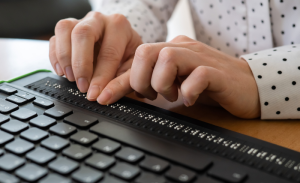
There are also additional pieces of kit that can be used alongside technology to assist with the reading of information in Braille.
There are many apps that can be used to support those with visual impairments to navigate the world around them. There are apps that can support with using public transport, navigating from one location to another, planning routes, and purchasing tickets or passes.
There are many smart devices that can support visually impaired people with their independent living at home. For example, voice controlled virtual assistants (e.g. Alexa and Siri) can help with day to day tasks and can be used to control other smart equipment such as lightbulbs and plug sockets.
There are also other accessibility features that can be used alongside traditional TV and radio to support those with visual impairment.

How can I stay safe online when using assistive technologies?
Technology is an important tool that helps people to stay connected, as well as supporting those with visual impairments to live independent lives. However, it is extremely important to be vigilant when using technology and ensure it is being used safely.
See the link below for tips on staying safe online.
Links to useful websites
Helpful videos on assistive technology
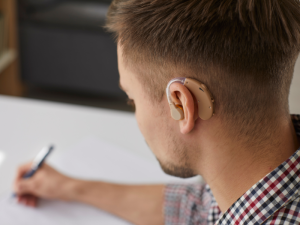
Hearing aid video tutorials


Are you a parent or carer of a Deaf child? Would you like to join a local community of parents and carers of deaf children for social events and support?
The South Hampshire Deaf Children’s Society is run by a group of parents of Deaf children and professionals supporting deaf children.
They want to create a community where their children have friendships with other Deaf children and a place to go for support and information in their local area.
Contact the Portsmouth Send Local Offer to gain help, get more information or to leave feedback about the website.
Get in touchTop