Skip to content

Share this page

Share this article on Facebook Tweet this article on Twitter Share this article on Linkedin

Participation and Co-production

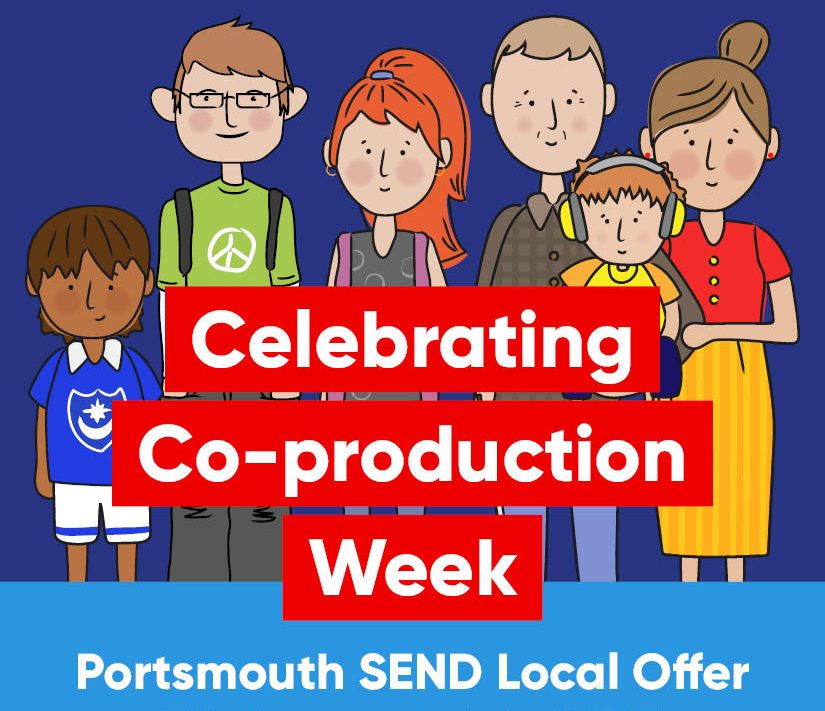
Left to right, a young child with a Pompey football shirt, a teenager with a green t-shirt, a teenage girl with red hair and a mother and father holding a child with ear protectors. The image has the words Celebrating Co-production Week title with the text Portsmouth SEND Local Offer underneath and the date of the week: 30 June - 4 July 2025.Co-production is a collaborative approach where communities and service providers work together as equal partners to design, deliver and evaluate services. It ensures that people with lived experience are at the heart of service creation, shaping outcomes that matter most to them.

Portsmouth relies on local organisations including parent/carer and young people’s groups to help shape services and make them become more inclusive for those with special educational needs and/or disabilities (SEND). While the examples on this page relate to young people with SEND,  the same approach can be applied to any groups who use services.

What is Co-production?

Dynamite, the young people’s SEND group define co-production as:

“Different parties coming together to give their views, ideas and suggestions to a given project. So that everyone’s point of view is taken, and all the information is used when creating something new.”

The short video below has been produced by the charity Kids, who champion the voice of young people with SEND, to provide  a simple explanation of participation and co-production.

A model of participation

There are many ways of working with people and communities from simply informing them, right through to full co-production. Projects will require different levels of participation and often many of these will overlap.

The following Flower Infographic Participation Model was developed by NHS England in their 2022 Statutory Guidance ‘Working in Partnership with People and Communities.’ The model has also been used by the Portsmouth City Council Co-production Board.

It simply explains the different types of participation. At the heart of the flower is people, showing how important it is to work together for more impactful outcomes. This model is not hierarchical and aims for organisations to use the best process for the project. Whilst co-production is seen as the ‘gold standard’ it is not always the best approach for the work being carried out.

Participation model. In the centre of the flower is 'start with people'. Each petal then has the different levels of participation. Inform - Sharing information about proposed changes so people understand what they mean. Consult - Asking for people's opinions on one or more ideas or options. Engage - Listening to people, understand issues and discuss ideas for change. Co-design -Designing with people and incorporating their ideas into the final approach. Co-production - an equal partnership where people with lived and learnt experience work together from start to finish.


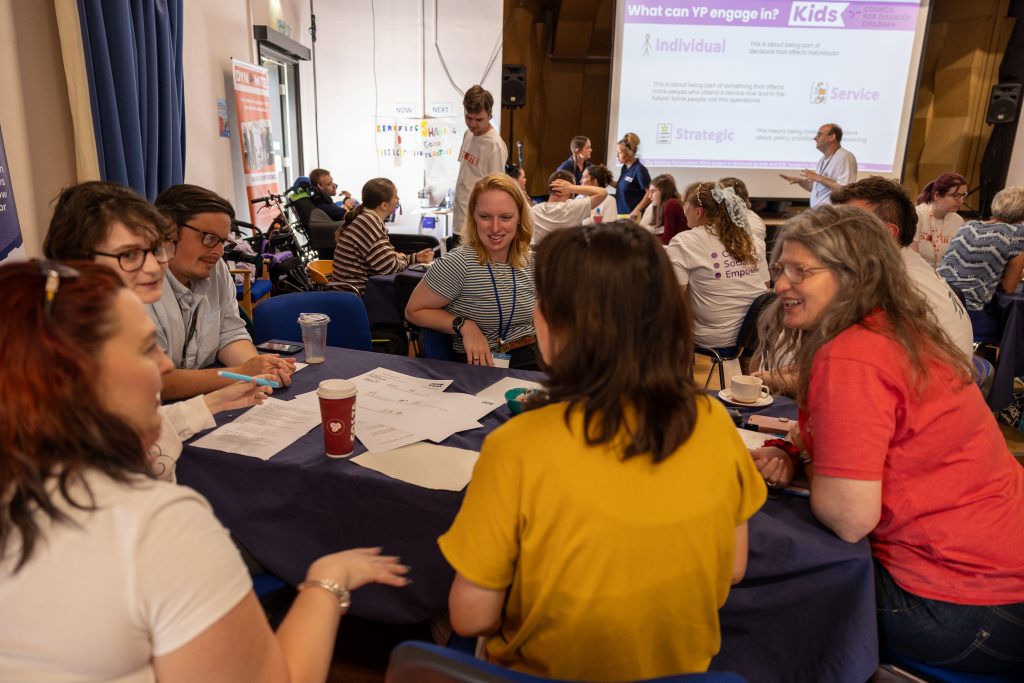
Photo of people sitting round a table doing co-production.

Top tips for successful co-production

Not sure where to start with co-production? Visit our top tips developed by parent carers and young people. Tips include, how to prepare, things to think about during co-production and implementation.

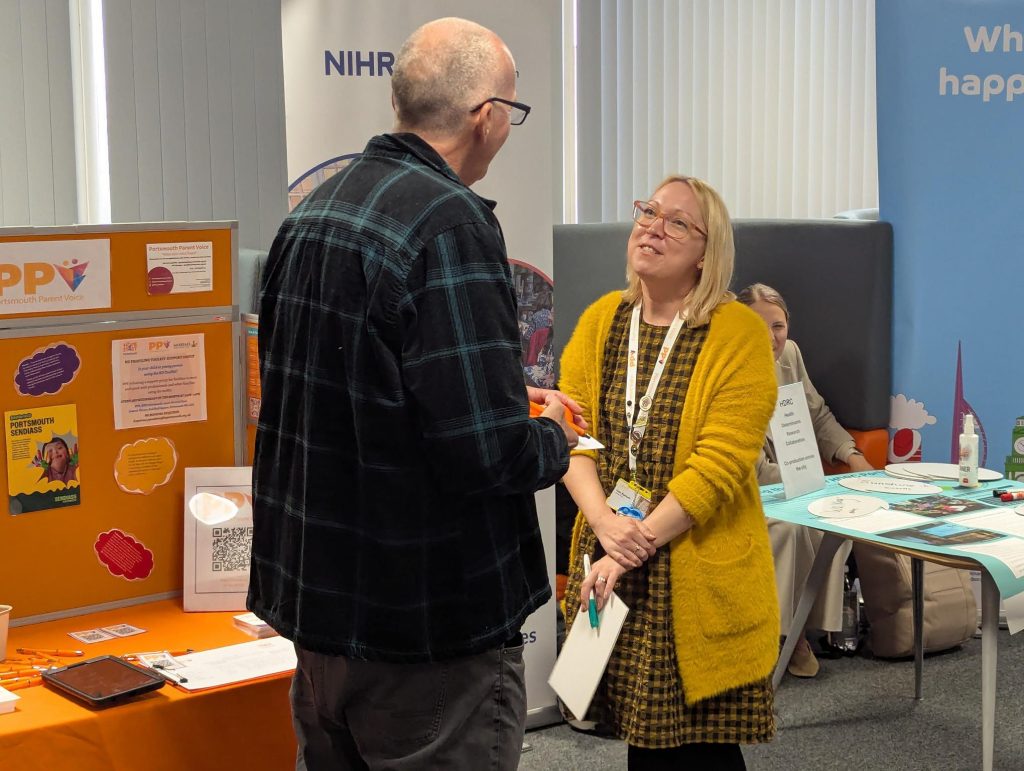
Representatives from Portsmouth Parent Voice talking to a council officer

How do we become an inclusive community?

What does being inclusive mean? Find out how your service can become more inclusive.

View the full co-production pack

This pack contains all the support and guidance in once place so that you can easily, save, print and share the information. It brings together practical guidance, useful tools to help everyone work together in a way that is inclusive, respectful, and focused on improving outcomes.

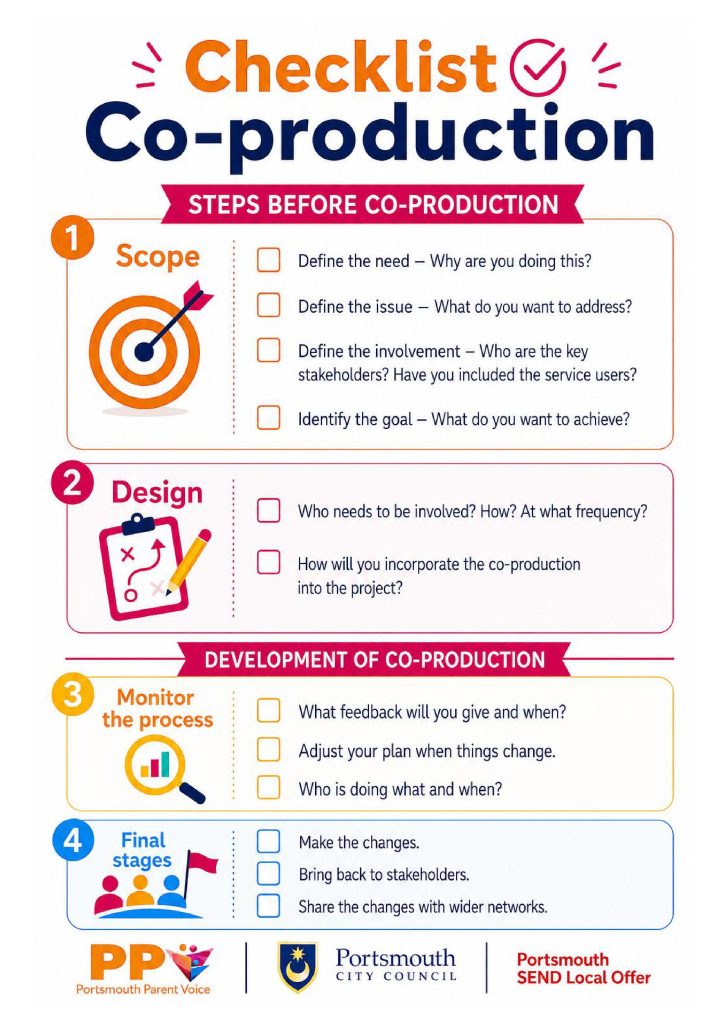
Co- production checklist. Scope: Define the need. Why are they doing this? Define the problem - what do you want to address? Define the involvement - who are the key stakeholders? Have you included the service users. Identify the goal - what do you want to achieve? Design: Who needs to be involved? How? And at what frequency? How will you incorporate the co-production into the project? Monitor the process: What feedback will you give and when? Adjust your plan when things change, who is doing what and when? Final stages: Make the changes, bring back to stakeholders, share the changes with wider networks.

Participation and co-production evidence log

To complete your co-production journey we would love to hear what worked well and what you would do differently so that we can keep a log of all the great co-production that is happening across the city. Sharing your story will help others with their co-production projects.

Complete this form to share your co-production stories with Portsmouth Parent Voice (PPV) and Portsmouth City Council.

Participation and Co-Production Checklist Evidence Log – Fill out form


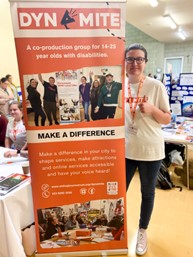
Dynamite young people's co-production group

Find out more, join the group or work with them on your co-production project

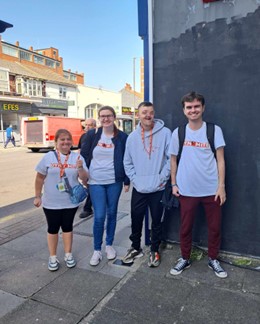
Dynamite members pictured together

Dynamite's Young Inspectors

Want to know if your service is inclusive and meeting the needs of young people in Portsmouth with SEND? The Young Inspectors can help and visit your service. You can read the reports of services the Young Inspectors have visited so far.

Stories of Co-production

Portsmouth SEND Local Offer brand refresh

Who commissioned the project?  Portsmouth City Council Local Offer


Background to the project

The Portsmouth SEND Local Offer exists, primarily as a website to provide information on the services and support available for families in the local area who have children or young people up to the age of 25 with special educational needs and /or a disability (SEND).

From feedback through surveys and attending parent carer forums it was clear that despite a strong social media presence and hosting numerous events, awareness among some families is still relatively low.


What was the project?

To increase awareness of the Local Offer and encourage more people to access the support available in the city. The project would include:

  • a brand refresh
  • a leaflet to go into distribution sites across Portsmouth.


What was the scope of the project and who was involved?

The project was co-designed with parent/carer forums and young people’s groups. They started by looking at the existing designs and developing these into a brief that could be given to designers. They also detailed a list of places they are most likely to see an advert or pick up a leaflet to help shape the overall communications plan.


What was the impact?

This project is still underway and is yet to be measured. The leaflet design is currently being reviewed and will be sent to print shortly. The design will be revisited on an annual basis to ensure the information is accurate and up to date.


What has being involved in coproduction meant for us?

“The key to successful co-design or co-production is allowing enough time from the outset of the project through to delivery. In this case involving young, people, parents, carers and professionals right from the beginning has helped to save both time and costs. As a result, we are now able to launch our campaign with confidence, knowing it truly resonates with our audience. We’re excited to tell you how our new leaflet is received and whether we see increased engagement in the coming months. “

Vicky Hodson Local Offer Officer

Dynamite Young Inspectors - Mary Rose Museum

Who commissioned the project?  Dynamites Young Inspectors with the Mary Rose Museum. 


Background to the project
Young Inspectors are young people with Special Educational Needs and Disabilities (SEND) who live in and use services across Portsmouth. The program enables these young people to use their lived experience to carry out a full and honest inspection covering five key areas: 

  • Website usability 
  • Accessibility 
  • Staff interaction 
  • Safety and surroundings 
  • Fun and enjoyment 

They discuss their findings, score the service out of 50, and decide whether to award the Dynamite Sticker of Approval, a recognition of inclusive, welcoming, and accessible environments. 


What were the aims of the project?
The main aim of the project was to support a more accessible and inclusive community by allowing young people with SEND to voice their experiences and drive improvements in public spaces and services. 


What was the scope of the project and who was involved?
The project focused on inspecting the Mary Rose Museum, evaluating its accessibility and overall visitor experience. The inspection was carried out by a team of Young Inspectors, supported by the Dynamite coordinator. Museum staff were also actively engaged, welcoming feedback and suggestions for improvement. 


What was the impact?
The project had a significant positive impact, both for the venue and the young people involved. It helped build the confidence and communication skills of the Young Inspectors, empowered them to voice their opinions, and fostered a strong sense of community spirit. For the Mary Rose Museum, the inspection offered valuable insights into how they could enhance accessibility and inclusivity for all visitors. 


 What has being involved in co-production meant for you?

“Being involved in co-production has been incredibly rewarding. It has been wonderful to see the confidence of our team grow, and to witness the development of meaningful connections and networks within the Portsmouth community. The project truly highlights the value of listening to young people with lived experience and involving them in shaping services.”

Michelle Cowley, Dynamite Coordinator

Room One - a space managed by autistic people, for autistic people

Who commissioned the project?

The Integrated Care Board and Adult Social Care

Background to the project

Room One is a space managed by autistic people, for autistic people in Portsmouth. The space is a one-stop shop for autistic and neurodivergent adults aged over 18 in the PO1 – PO6 area, their family and friends, and the professionals supporting them.

A formal diagnosis is not required to access the support at Room One. Room One was created out of Portsmouth’s Autism Community Forum (PACF) highlighting the lack of support in Portsmouth for autistic adults. From this, and research commissioned and completed by Adult Social Care entitled “If Not Now, When?” Room One was developed.

Room One is funded by the Integrated Care Board and Adult Social Care. Adult Social Care also host the service.

Wherever possible, the service is co – produced including down to the colour of the walls! Initially, an oversight group was formed, which had autistic people, the Portsmouth Autism Community Forum, Adult Social Care and the Integrated Care Boards. Feedback on this was that it felt very local authority led, so the decision to disband this was made and hold quarterly co – production events. Two of these have been held,  the last focused on data collection and how this can be done, where the autistic people in attendance provided really helpful insight into how data collection could impact service delivery. The service is delivered by a primarily neurodivergent staff team, so we are able to incorporate the autistic voice in everything the service does.

What were the aims of the project?

To develop a service, jointly between services and people with lived experience, that adequately meet autistic and neurodivergent people’s needs.

What was the impact?

In 2024 – 2025, Room One held 552 1:1 sessions, had 986 attendances at groups and welcomed 157 new individuals into the service. This is four times more than the year before, indicating the real need for a service of this nature. In the last year, three new members of staff have been recruited to support this. Autistic people were involved in the recruitment of this staff team.

What has being involved in co-production meant for you?

Feedback from people who have been involved in our co – production is that they enjoy being involved in the development of the service they use.

“When I represent Social Care in co – production, I am always grateful to the people who take the time to share their stories, skills and expertise, to develop services that the people who use them, actually want to use.”

Kayley Sayers-Portsmouth City Council Social Work


Special Care Dentist Team

Who commissioned the project?

Kids Young People’s Participation Team in the South – Funded by the DfE

Background to the project

Kids Young People’s Participation Team South is made up of young people aged 13 – 25 years with special educational needs and / or disabilities. The group is funded by the Department for Education (DfE), and we work closely with them to include the voice of young people in creating and improving policy. The Team will occasionally work with local services/ organisations and groups to support them to become more accessible for young people with SEND.

What were the aims of the project?

To support Hampshire and Isle of Wight Special Care Dentist Team with reviewing their accessible information leaflets and video’s.

What was the scope of the project and who was involved?

Young people in the Kids group worked with Vicky Watkinson, the learning disability nurse and oral health educator.

The young people get to look at leaflets and videos to think about
• whether they understand what the leaflet is explaining.
• If the wording is clear and if any jargon is used.
• If the pictures match with the description.
• Colours and font used are clear.

The young people also created a video with the Team on ‘How to go to the dentist’ This was for young people to access, so they know what to expect, hopefully helping them feel more relaxed and comfortable attending dental appointments.

What was the impact?

Vicky and the special care dental team take on board the young people’s comments and comes back to the group to show what has been changed and if some changes cannot be made straight away, the young people are kept informed. The leaflet or video is sent back to the group with the changes made and the young people can see their input in action. The dental team always make the young people feel valued and meaningful included.

The work with the Dental Teams resources is to enable more people with SEND (not just young people), to successfully access this service, have a positive experience, and get the care they need.

What has being involved in co-production meant for you?

Comment from Carly who features in the video.

“Hi, I’m Carly I have mild cerebral palsy, a learning disability and a visual impairment. I wanted to share my positive experience of working with my local NHS dentist, which now also helps others with their trip to the dentist. I used to be very nervous about going to the dentist. Then I found out about the NHS Special Care Dental Service. They supported me to make visiting the dentist less stressful and I thought it was important for all young people with SEND to have the same experience as me.

I worked with the team to create an amazing video on how to go to the dentist and what communication methods they have for young people.

Our participation group have recently been asked to review leaflets for different treatments and suggest changes that could be made to pictures or wording to help making sure it is accessible for all.

This is a great example of an NHS service where they are listening to young people directly and has had such a positive impact.”

Comment from Vicky at the special care dental team.

“Without the young people’s support to review our Accessible Information leaflets, our resources would not be as good as they could be. Already, in the brief time we have been working with them, they have given us valuable insight into how we could do things differently, ensuring we progressively move forward and keep up with change rather than staying stagnant.”
Dynamite and Kids: Delivering strategic co-production for meaningful impact within local communities and engagement in national SEND topics

Background to the project

Dynamite is a Portsmouth-based participation group dedicated to amplifying the voices of SEND young people aged 14-25. Their mission is to ensure that these young individuals are heard and actively participate in discussions about local topics that affect them.

Scope and involvement

Dynamite has been engaging with the national charity Kids to further advocate for SEND young people’s rights and needs in national topics that affect them. Kids, known for their commitment to supporting disabled children to have a voice in national discussions, offered valuable resources for the group to be able to feed into Department for Education (DfE) topics. These have included:

  • Call for evidence on curriculum and assessments
  • Development of toolkit to engage children and young people in the proposed wrap around care policy
  • SEND review

Impact

Through this collaboration, Dynamite has taken part in workshops and discussions that enable SEND young people to share their experiences and ideas on national topics. These topics aligned with and fed into the Department for Education’s initiatives and work strands, influencing government policy. The partnership has also provided training together for local organisations on ‘involving young people with SEND in developing services that work for everyone.’ Making Portsmouth a more inclusive city.

This case study highlights the significant impact of collaborative efforts between local groups and national charities in empowering young people. By working together, Dynamite and Kids have created a more inclusive and supportive environment for SEND young people in Portsmouth, making sure their voices are not just being heard in local matters but also in national topics that are important to them.

Organisations who can help support with co-production

Shaping Better Futures Together and Portsmouth Parent Voice

Shaping Better Futures Together is run monthly by Portsmouth Parent Voice. (PPV) Attendees include parent carers, education and healthcare professionals, as well as service managers. Co-production projects are brought to the group to work on within the meeting.

Coproduction Workshop | PPV – Portsmouth Parent Voice

Portsmouth Parent Voice would be happy to chat to you about your co-production project. You can visit their website for contact details.

Home | Portsmouth Parent Voice

Neurodiversity Team

The Neurodiversity Team have been involved in many co-production projects.

Visit their website:

Family Assist Solent – Neurodiversity

19Enquiries@portsmouthcc.gov.uk

Dynamite and the Young Inspectors

Dynamite are the young people’s SEND group involved in many participation and co-production projects, improving services in the city for young people.

Please contact Dynamite if you would like to work with them on a project or want some advice around co-production with young people.

Dynamite – MAKE@Aldingbourne – Email: dynamite@aldingbourne.org

You can also request for the Young Inspectors to visit your service to help you find ways to make your service even more accessible.

Young Inspectors – MAKE@Aldingbourne

Kids

Kids Southern young people’s group called Amplify is made up of young people aged 13 – 25 years SEND. Kids Amplify group take part in national matters and work with the Department for Education (DfE) to include the voice of young people in creating and improving policy. They work on many participation and co-production projects, including leading on the Portsmouth workshop that was held in 2025 to support local organisations to become more inclusive.

Youth Voice – Young People’s Hub from KIDS

Email: takepart@kids.org.uk


Homestart and Portsmouth Parent Board

Portsmouth Homestart have particular experience with co-production around Early Years.

Home-Start Portsmouth  Email: office@hsportsmouth.org.uk

Portsmouth Parent Board have worked on many co-production projects in the city to support families.

Parent | Portsmouth | Portsmouth Parent and Carer Board  Email: laceyi@hsportsmouth.org.uk


Health Determinants Research Collaboration (HDRC)

HDRC is a partnership between Portsmouth City Council, HIVE Portsmouth and the University of Portsmouth –HDRC Portsmouth. Their goal is to support better health and wellbeing across the city by joining council service evidence, community insight, and academic research together to make more effective local decisions. Find out how the team can support you in your work. 

Email:  HDRC@portsmouthcc.gov.uk

Useful links to help with your co-production project

Contact

If you require any further information or guidance with your co-production project, please email portsmouthlocaloffer@portsmouthcc,gov.uk 

Get in touch - tell us what you think

Contact the Portsmouth Send Local Offer to gain help, get more information or to leave feedback about the website.

Get in touch

Top