Skip to content

Share this page

Share this article on Facebook Tweet this article on Twitter Share this article on Linkedin

Multi-Sensory Impairment

Also known as Dual-Sensory Loss and Deafblindness

Children and young people with multi-sensory impairment (MSI) have impairments or loss of both sight and hearing. MSI can also be known as Deafblindness or Dual-Sensory Impairment. It does not mean that the person cannot see or hear anything.  It means that a hearing and vision loss affects their every-day life.  It can affect the way they experiences the world, the way they communicate or get around their environment and interact.  Many children or young people also have other physical, health or additional needs.  It can often be the result of an illness or injury but not always.  Ushers is an example of a genetic condition which can progressively lead to deafblindness.

In 1995, the Department of Health established a legal definition of deafblindness:

“A person is regarded as deafblind if their combined sight and hearing impairment cause difficulties with communication, access to information and mobility. This includes people with a progressive sight and hearing loss.”

Asessment

Multisensory impairment may be picked up soon after a baby is born, or after tests carried out when older. If your baby is born deafblind, this will usually be picked up during newborn screening. These are a series of checks carried out to see if your baby has any serious health problems from birth.  Speak to your GP if you have any concerns about your child’s hearing and/or vision.

Deafblind guidance assessment is available for any child or young person who has a visual and hearing impairment that impacts on their daily life, this includes communication, access to information and mobility.  A request for a Deafblind guidance assessment can be submitted to the local authority regardless of whether you are already receiving services or this is your first assessment.  You should request to be assessed in accordance with the Deafblind guidance assessment. Councils in England and Wales have a responsibility to follow the requirements of the 2014 deafblind guidance.

In the case of babies and very young children it may be better to “watch and wait” before completing a full assessment.  This can mean that so a true account of their learning and development can be obtained.  This can more accurately inform future services they may need.

You can also contact the charity SENSE for a copy of the guidance.

Support in education

If your child or young person has a multisensory impairment, they will need additional support to help them achieve their potential. You can raise any concerns with your child’s education setting, ask to speak to the Special Educational Needs Coordinator (SENCO) or Head Teacher.

A referral may be made to the Vision and Hearing Team who aim to promote the achievement, inclusion, well-being and quality of life of children and young people with a sensory impairment, whether that is hearing loss, sight loss or multisensory impairment.


MSI referral Criteria to Vision and Hearing Team, Portsmouth

The Child or Young Person must have a visual and hearing loss. They must meet the criteria for referral for vision and hearing. The Child or Young Person should be on the visual impairment caseload. as well as the hearing impairment caseload. Children and young people with a medical diagnosis of dual sensory impairment will also meet criteria.  Medical information must be provided indicating the level of impairment in both vision and hearing. Parents must have given consent for the referral to be made. The child or young person must be resident in Portsmouth.  An attempt to make contact will be carried out within 5 working days and a visit is offered within 10 working days of contact.  The child or young person will be visited by the Specialist Teacher Advisers for Vision and for Hearing. The levels of support will be guided by the nature, severity and complexity of their needs.

Level of Support

The level of support may be subject to change according to changing needs. The levels of support will be guided by the nature, severity and complexity of their needs, according to the National Sensory Impairment Partnership (NatSIP) criteria and informed by the VHT MSI Specialist School visit criteria.

www.natsip.org.uk

Profound multi-sensory loss will often be associated with a profound loss in both or the most affected modality

  • Hearing loss in excess of 95dB.
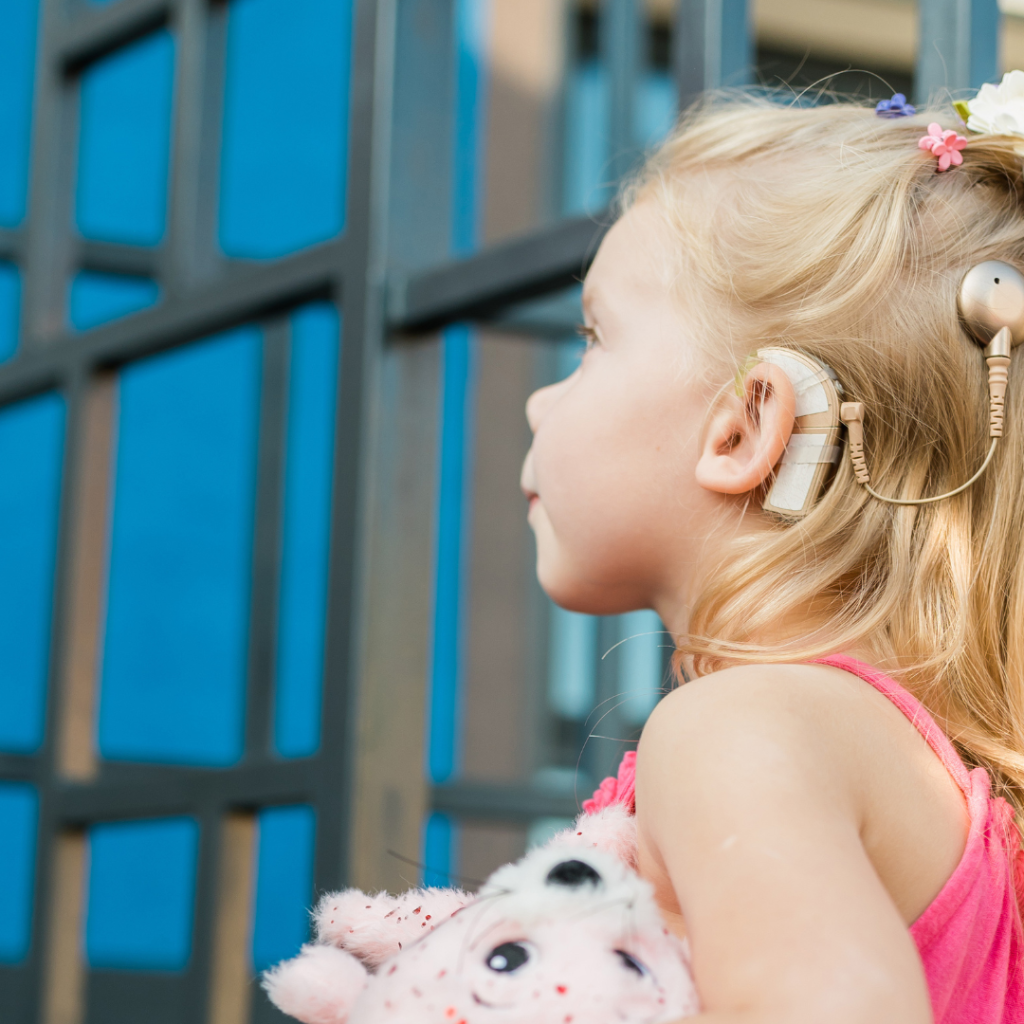
  • Usually Cochlear implant, radio aid and some will have a sound field system.
  • Visual Acuities lower than 6/60 Tactile learner.

Severe multi-sensory loss: will often be associated with a severe loss in both or the most affected modality.

  • Hearing loss 71-95dB.
  • Children will be aided may have a cochlear implant, radio aids and some will have sound field system.
  • Or context where there is a high risk of language delay, cognitive language disorder, auditory neuropathy or additional medical needs,
  • Visual Acuities 6/36-6/60 (including diagnosis of Cerebral Visual Impairment) e.g. 6/36 means that a learner with a VI has to be at 6 metres to see what a fully sighted peer can see at 36 metres and/or
  • learner requires large print over and including N24

Moderate multi-sensory loss  will often be associated with a moderate loss in both or the most affected modality.

  • Moderate hearing loss: 41-70dB.
  • Children will be aided, some will have a radio aid and sound field system.
  • Visual Acuities: 6/18-6/36 and having an impact on their ability to access education e.g. 6/18 means that a learner with a VI has to be at 6 metres to see what a fully sighted peer can see at 18 metres and/or
  • large print user N14-N18

Mild multi-sensory loss will often be associated with a mild loss in both or the most affected modality

  • Mild hearing loss levels 21-40db.
  • Children may have hearing aids/radio aids/Sound Field Technology.
  • Visual acuities: Within the range 6/12-6/18 e.g. 6/12 means that a C/YP with a VI has to be at 6 metres to see what a fully sighted peer can see at 12 metres and having a low impact on their ability to access the curriculum and/or requires print up to size N14
Further support and information

Sense provide services for individuals who are deafblind and / or complex disabilities. Sense has a specialist service for children and families, regional branches and a national family network. Sense may be able to advise you on the possibility of accessing a local parent and toddlers group or similar.

Deafblind UK is an organisation that supports people who have a sight and hearing loss.

The National Sensory Impairment Partnership is a partnership working to improve outcomes for children

Deafblind Manual Alphabet

English-Factfiles-on-well-known-people-who-are-deafblind.pdf

Get in touch - tell us what you think

Contact the Portsmouth Send Local Offer to gain help, get more information or to leave feedback about the website.

Get in touch

Top